
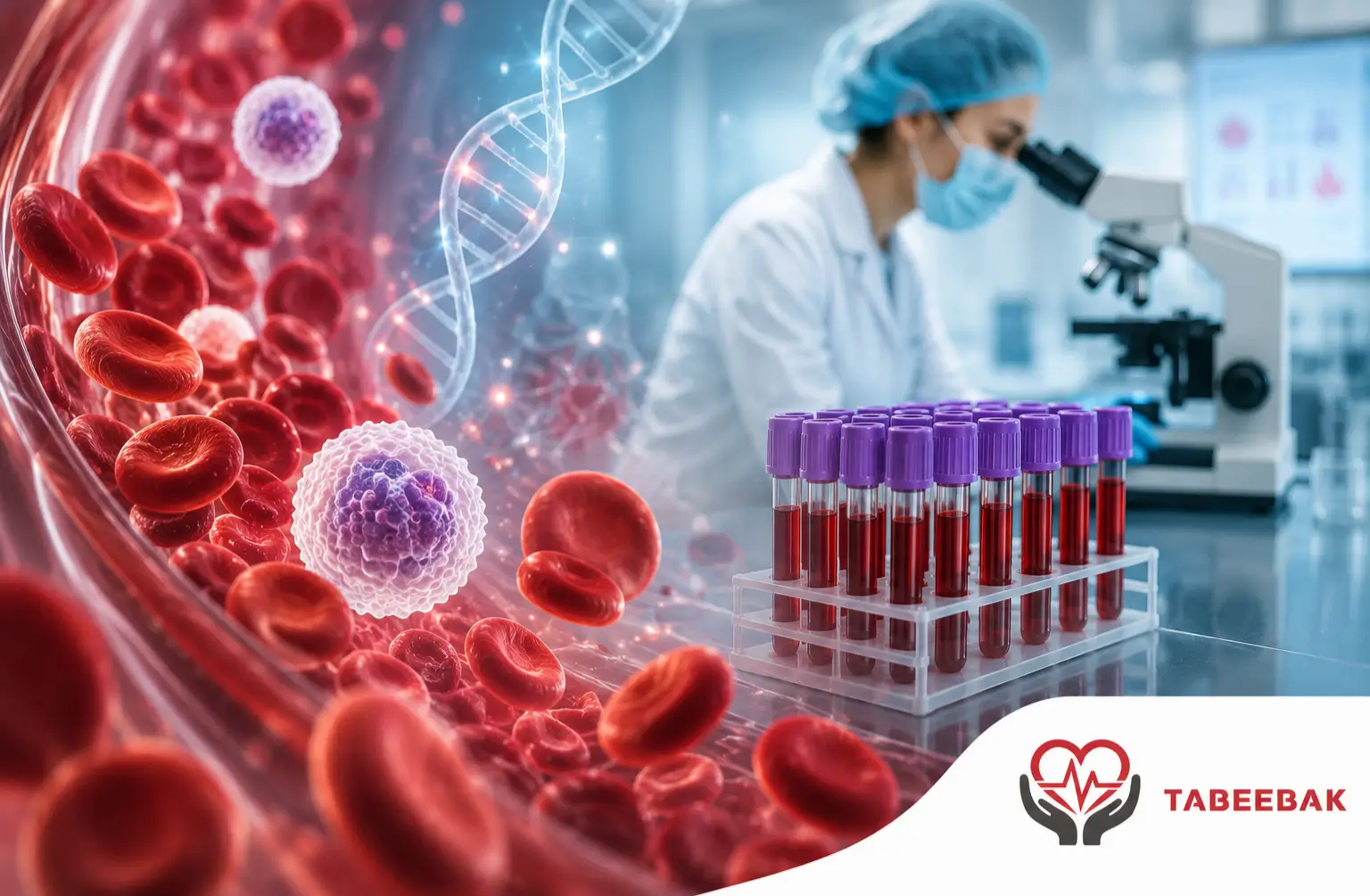
The need to consult a hematologist may begin with a seemingly simple but unclear finding:
white blood cell count, frequent bruising, or a blood clot occurring at a young age.
These findings do not automatically indicate a serious disease. However, they may require
an interpretation that goes beyond the number shown in a laboratory report. A hematologist
in Turkey evaluates laboratory results alongside the patient’s symptoms, medical history,
medications, and previous examinations to identify the cause of the abnormality and develop
an appropriate monitoring or treatment plan.
Tabeebak Healthcare helps international patients submit their medical reports, identify the
appropriate hematology subspecialty, and coordinate a medical file review with a suitable
physician or specialized center in Turkey before travel arrangements are made.
Submit your blood test reports for an initial medical file review
Overview
- Patient category covered by this page:
Adult hematology. - Areas of care:
Anemia, platelet disorders, bleeding and clotting disorders, bone marrow diseases,
and hematologic cancers. - Starting the evaluation:
Reviewing previous laboratory results and medical reports before determining which
new tests are required. - Complex cases:
These may require a specialized hematology laboratory, a multidisciplinary medical
board, or a bone marrow transplant unit. - Pediatric hematology:
Children are evaluated by a separate specialty suited to their age and the nature
of their condition.
What Is Hematology?
Hematology is the branch of medicine concerned with the health of the blood and the organs
and tissues involved in its production and regulation.
The specialty is not limited to anemia or blood cancer. It also covers:
- Red blood cells.
- White blood cells.
- Platelets.
- Bone marrow.
- Lymph nodes and the spleen.
- Clotting proteins.
- Bleeding disorders and abnormal blood clot formation.
The American Society of Hematology explains that the specialty includes disorders affecting
blood cells, bone marrow, lymph nodes, the spleen, blood vessels, and the proteins responsible
for bleeding and clotting.
When Should You See a Hematologist?
A family physician or internal medicine specialist may refer you to a hematologist when an
abnormal result repeatedly appears or when its cause remains unclear.
Common reasons for referral include:
- Anemia that does not improve with standard treatment.
- An unexplained decrease or increase in platelet levels.
- A persistent increase or decrease in white blood cells.
- Frequent bleeding from the nose or gums.
- Bruising without an obvious cause.
- Very heavy menstrual bleeding associated with anemia.
- Recurrent blood clots or clots occurring at a young age.
- Unexplained enlargement of the lymph nodes or spleen.
- Severe fatigue accompanied by weight loss or night sweats.
- Abnormal findings on a peripheral blood smear.
- Suspected bone marrow disease.
- A previous diagnosis of leukemia, lymphoma, or myeloma.
- A need for a second opinion before beginning complex treatment.
Not every abnormal complete blood count, or CBC, result indicates blood cancer. Results may
be affected by infections, nutritional deficiencies, medications, inflammation, pregnancy,
chronic diseases, and many other factors.
Hematology Care Pathways
Rather than grouping every blood disorder into a single list, hematologic conditions are
clinically divided into care pathways. This helps direct each patient to the appropriate
physician, laboratory, and treatment unit.
Anemia and Red Blood Cell Disorders
Anemia occurs when the body does not have enough red blood cells or hemoglobin to deliver
oxygen adequately to the tissues.
A diagnosis of anemia does not always mean that the patient has iron deficiency. Anemia
may be associated with:
- Iron deficiency.
- Vitamin B12 or folate deficiency.
- Chronic bleeding.
- Inflammatory or chronic diseases.
- Kidney disease.
- Red blood cell destruction, or hemolysis.
- Bone marrow disorders.
- Thalassemia.
- Sickle cell disease.
- Aplastic anemia.
The evaluation usually begins by examining the shape and size of the blood cells, iron
stores, reticulocyte count, and clinical history. More specialized tests may then be
requested when necessary.
Medical sources indicate that bone marrow aspiration or biopsy may be used in selected
cases to determine the cause of unusually high or low blood cell counts. These procedures
are not required for every patient with anemia.
Platelet Disorders
Platelets help form blood clots and stop bleeding. A platelet disorder may affect either
the number of platelets or the way they function.
Conditions evaluated by a hematologist include:
- Immune thrombocytopenia, or ITP.
- Thrombocytopenia associated with medications or infections.
- Reactive thrombocytosis.
- Essential thrombocythemia.
- Platelet function disorders.
- Thrombocytopenia associated with bone marrow diseases.
A high or low platelet count may be discovered during a routine blood test. However,
determining the cause requires reviewing the other blood cell counts and the patient’s
medical history. In some cases, a bone marrow evaluation may also be required.
Bleeding and Clotting Disorders
The body maintains a delicate balance: blood must clot when an injury occurs, while
remaining fluid inside the blood vessels under normal conditions.
The Hematology Department manages conditions such as:
- Hemophilia.
- Von Willebrand disease.
- Clotting factor deficiencies.
- Unexplained bleeding.
- Recurrent venous blood clots.
- Blood clots occurring at a young age.
- Blood clots during pregnancy or after childbirth.
- Suspected thrombophilia or increased blood clotting tendency.
- Monitoring anticoagulant medications in complex cases.
Diagnosis is based on the patient’s history of bleeding or clotting, family history,
clinical examination, and the results of blood and coagulation tests.
Bone Marrow Diseases
Bone marrow is the tissue in which blood cells are produced. Bone marrow disorders may
cause the body to produce too few, too many, or abnormal blood cells.
Conditions included in this pathway include:
- Bone marrow failure.
- Aplastic anemia.
- Myelodysplastic syndromes, or MDS.
- Myeloproliferative neoplasms, or MPN.
- Polycythemia vera.
- Myelofibrosis.
- Paroxysmal nocturnal hemoglobinuria, or PNH.
- Bone marrow disorders associated with immune or inherited diseases.
Depending on the type and severity of the disease, as well as the patient’s age and
overall health, the treatment plan may range from regular monitoring and medication to
blood component transfusions or stem cell transplantation.
Blood Cancers
Blood cancers develop in blood-forming tissues, such as the bone marrow, or in cells of the
immune system.
The main categories include:
Leukemia
Leukemia is the name given to a group of cancers affecting blood cells. Its different
types are classified according to the cell in which the disease began and how rapidly
it progresses.
Leukemia may be acute, requiring prompt evaluation and treatment, or chronic, in which
case it may sometimes be discovered during a routine blood test.
Lymphoma
Lymphoma develops in lymphocytes and may appear as enlarged lymph nodes or affect other
organs. The diagnosis includes multiple types of Hodgkin and non-Hodgkin lymphoma, each
of which requires a different treatment plan.
Multiple Myeloma
Multiple myeloma develops from plasma cells and may affect the bones, kidneys, immune
system, or the production of blood cells.
The term blood cancer is used to describe cancers that begin in the bone marrow,
blood-forming tissues, or cells of the immune system. Examples include leukemia, lymphoma,
and multiple myeloma.
How Does the Diagnosis of a Blood Disorder Begin?
The evaluation does not begin with an advanced test selected at random. It begins with a
clear question:
What change has occurred in the blood, is it temporary or persistent, and what is its most
likely cause?
Stage One: Reviewing the Overall Clinical Picture
The physician reviews:
- The patient’s symptoms and how long they have been present.
- Chronic medical conditions.
- Medications and supplements.
- Previous surgeries or bleeding episodes.
- Pregnancy and childbirth history.
- Family medical history.
- Previous and recent laboratory results.
- History of blood clots or blood transfusions.
A series of laboratory results collected over several months or years may be more useful
than a single isolated test.
Stage Two: Targeted Basic Tests
Depending on the condition, these may include:
- Complete blood count, or CBC.
- Peripheral blood smear.
- Reticulocyte count.
- Iron and ferritin levels.
- Vitamin B12 and folate levels.
- Hemolysis markers.
- Liver and kidney function tests.
- Coagulation tests.
- Tests for inherited hemoglobin disorders.
- Selected immune or viral tests.
A CBC measures red blood cells, white blood cells, and platelets, but it cannot establish
a final diagnosis on its own.
Stage Three: Specialized Diagnostic Tests
When the findings suggest a bone marrow disorder or hematologic cancer, the medical team
may request:
- Bone marrow aspiration and biopsy.
- Flow cytometry.
- Immunophenotyping.
- Chromosome analysis.
- FISH testing.
- PCR testing.
- Molecular analysis or gene sequencing.
- Lymph node biopsy.
- CT or PET-CT imaging, depending on the condition.
Flow cytometry, cytogenetic tests, and molecular analyses help physicians accurately
identify certain types of leukemia, select the appropriate treatment, and monitor the
response to therapy.
Stage Four: Establishing the Diagnosis and Treatment Plan
After all results have been collected, the hematologist in Turkey determines:
- The precise diagnosis.
- The type and classification of the disease.
- Its risk category.
- Whether treatment is required immediately.
- Whether monitoring alone is sufficient.
- Whether any additional tests are needed.
- Whether the case should be reviewed by a hematologic oncology board.
- Whether bone marrow transplantation or cellular therapy may be an option.
Blood Disorder Treatment Is Not Based on a Single Test Result
There is no single general treatment for all blood disorders. Treatment may be as simple
as correcting a nutritional deficiency, or it may require long-term monitoring,
immunotherapy, targeted medication, or a comprehensive treatment program.
Treatment options may include:
- Treating the underlying cause of anemia.
- Iron or vitamin replacement when a deficiency has been confirmed.
- Medications that regulate blood cell production.
- Immunosuppressive medications.
- Medications used to prevent or treat blood clots.
- Clotting factor replacement.
- Red blood cell or platelet transfusions.
- Chemotherapy.
- Targeted therapy.
- Immunotherapy.
- Therapeutic apheresis.
- Bone marrow or stem cell transplantation.
- CAR T-cell therapy for eligible patients at centers where the treatment is available.
- Active surveillance for selected slow-progressing diseases.
Treatment selection depends on the specific diagnosis, genetic test results, disease stage,
previous treatments, and the patient’s overall condition. It is not based solely on the
general name of the disease.
Bone Marrow Transplantation and Cellular Therapies
Stem cell transplantation may be included in the treatment of selected cases of leukemia,
lymphoma, myeloma, bone marrow failure, and inherited blood disorders.
However, having a blood disorder does not automatically mean that transplantation is
required. The following factors must first be evaluated:
- The type of disease.
- The disease risk category.
- The response to previous treatment.
- The patient’s age and overall health.
- The availability of a suitable donor when required.
- The potential risks of transplantation compared with its expected benefits.
- The center’s experience and infection-prevention protocols.
For detailed information, this section should link to the
Bone Marrow Transplantation in Turkey
page.
CAR T-cell therapy is a personalized treatment used for selected eligible blood cancers.
It is not a universal replacement for chemotherapy or bone marrow transplantation.
A Hematology Team Involves More Than One Physician
Complex cases require collaboration between multiple specialties. The care team may include:
- A hematologist.
- A hematologic oncologist.
- A bone marrow specialist.
- A hematopathologist.
- Flow cytometry and genetics laboratory specialists.
- Blood bank and transfusion medicine specialists.
- A therapeutic apheresis team.
- A stem cell transplantation team.
- Infectious disease specialists.
- An intensive care team.
- Radiology and nuclear medicine specialists.
- Medical and radiation oncologists.
- Clinical nutritionists and pharmacists.
Care models at specialized hematology centers emphasize coordination between physicians,
laboratories, pathology services, imaging departments, and treatment units to ensure an
accurate diagnosis and the timely initiation of treatment.
Adult Hematology and Pediatric Hematology
This page covers blood disorders in adults.
Children and adolescents require a separate specialty because the types of disease,
medication doses, psychological support requirements, growth considerations, and immune
system needs differ from those of adults.
When evaluating a patient under the age of 18, visit the
Pediatric Hematology and Oncology
page instead of booking an appointment with the adult department.
How to Choose a Hematology Center
It is not enough for a hospital simply to have a hematologist. When the patient has a
complex condition, it is important to confirm that the hospital also provides the diagnostic
and treatment services the case may require.
Ask about:
- The physician’s experience with the specific disease.
- The availability of a specialized hematology laboratory.
- The availability of flow cytometry and molecular testing.
- The pathology department’s experience with hematologic cancers.
- The ability to perform bone marrow aspiration and biopsy.
- Blood bank and blood component transfusion services.
- A therapeutic apheresis unit.
- Protective isolation rooms for immunocompromised patients.
- Intensive care services.
- A multidisciplinary hematologic oncology board.
- A bone marrow transplant unit when required.
- A follow-up system for patients after they leave Turkey.
The availability of each service must be confirmed at the selected hospital, as facilities
and capabilities vary from one medical center to another.
Hematology Hospitals in Turkey
Diagnostic and treatment services for blood disorders are available at several Acıbadem and
Medical Park hospitals in Istanbul and other Turkish cities.
The most appropriate center depends on the type of condition. Some hospitals focus on anemia,
platelet disorders, and clotting conditions, while others have specialized teams for
leukemia, lymphoma, myeloma, and stem cell transplantation.
Hospitals that currently list hematology specialists include:
- Acıbadem Maslak Hospital
- Acıbadem Ataşehir Hospital.
- Acıbadem Altunizade Hospital.
- Acıbadem Atakent Hospital.
- Acıbadem İzmir Kent Hospital.
- Medical Park Bahçelievler Hospital.
- Medical Park Pendik Hospital.
- Medical Park Göztepe Hospital.
- Medical Park Gaziosmanpaşa Hospital.
The physician and available medical services should be confirmed after the patient’s medical
file has been reviewed, as clinical teams and treatment units may vary between hospital
branches.
Medical File Review Before Traveling
In many cases, the initial evaluation can begin before the patient travels, especially when
the medical file is well organized and includes the essential reports.
Please submit:
- Recent and previous complete blood count results.
- A peripheral blood smear report, if available.
- A bone marrow aspiration or biopsy report.
- A flow cytometry report.
- Genetic or cytogenetic test results.
- A lymph node biopsy report.
- The most recent CT or PET-CT report.
- A list of previous treatments.
- Treatment dates and information about the response to treatment.
- A history of blood or platelet transfusions.
- A list of current medications.
- Details of chronic medical conditions.
- A previous transplant report, if applicable.
- HLA typing results, if previously performed.
Do not submit unclear images or incomplete reports. Whenever possible, organize the medical
file into clearly labeled PDF documents arranged in chronological order.
The Patient Journey with Tabeebak Healthcare
Reviewing the Completeness of the Medical File
The coordination team checks whether the essential reports are included and requests any
missing documents before forwarding the case to a physician.
Identifying the Appropriate Subspecialty
The case is directed to a specialist in benign hematology, hematologic oncology,
coagulation disorders, or bone marrow transplantation, depending on the diagnosis.
Obtaining a Preliminary Medical Opinion
The response may include:
- Confirmation that the case can be reviewed.
- A request for additional tests.
- A recommendation for a direct consultation.
- An assessment of how urgently the patient should be evaluated.
- Notification that the required treatment is unavailable at the selected center.
- A recommendation for another, more suitable medical center.
Coordinating the Appointment
Once the medical file has been accepted, the appointment, arrival plan, and list of
reports the patient should bring are coordinated.
Follow-Up
Tabeebak Healthcare assists with organizing communication, medical reports, and follow-up
after the consultation or treatment without replacing the patient’s relationship with
the treating physician.
When Does a Blood Disorder Require Urgent Evaluation?
Seek urgent medical care if the patient experiences:
- Severe bleeding or bleeding that does not stop.
- Shortness of breath or chest pain.
- Sudden weakness or changes in speech or consciousness.
- Sudden swelling and pain in one of the limbs.
- Fever in a patient with severe immune suppression.
- Extensive bleeding under the skin accompanied by a decline in general condition.
- Severe paleness accompanied by dizziness or fainting.
- Rapid deterioration in a patient diagnosed with leukemia or bone marrow failure.
Do not wait for a travel date or remote consultation when the patient is experiencing a
medical emergency.
Medical Review and Sources
This page was prepared to explain the scope of hematology and its diagnostic and treatment
pathways in an accessible manner. The information does not constitute an individual
diagnosis or personalized treatment plan.
- Medical reviewer:
Professor Dr. Burhan Turgut, Hematology Specialist. - Review date:
July 22, 2026. - Content prepared by:
The Medical Editorial Team.
The content was based on reliable medical references, including: