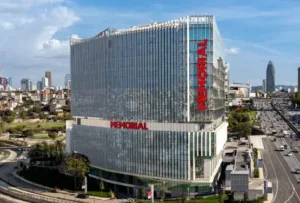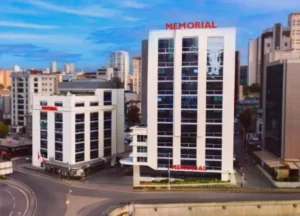
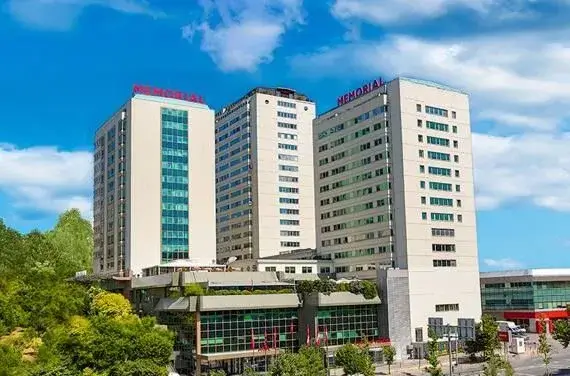
Memorial Şişli Hospital is located on the European side of Istanbul and was the first hospital opened by Memorial Healthcare Group. The hospital includes advanced specialties and centers for liver and kidney transplantation, oncology, cardiology and cardiovascular surgery, IVF and genetics, bone marrow transplantation, neurosurgery, and robotic surgery. Tabibak Healthcare helps international patients submit their medical records, choose the appropriate department and doctor, and obtain an initial evaluation, treatment plan, and cost estimate before arranging travel to Turkey.
Quick Facts About Memorial Şişli Hospital
About Memorial Şişli Hospital
Memorial Şişli Hospital is the first hospital established by Memorial Healthcare Group in Turkey. The project began in 1996 with consultancy support from ECRI, and the hospital welcomed its first patients in 2000. Located in the Şişli district on the European side of Istanbul, it operates as a multidisciplinary hospital combining medical and surgical departments with advanced diagnostic and treatment centers.
Memorial Şişli is particularly notable for cases that require collaboration between multiple specialties within a single treatment plan, such as oncology, organ transplantation, hematology, cardiology, complex surgery, and IVF. The presence of several specialized medical centers within the hospital facilitates coordination of examinations, consultations, and treatment in one facility, making it an option for patients who require multidisciplinary follow-up.
Memorial Şişli Hospital in Numbers
The scale of the infrastructure at Memorial Şişli Hospital reflects its ability to manage medical and surgical cases across multiple specialties, with dedicated facilities for surgery, intensive care, and laboratory diagnostics.
| Information | Details |
|---|---|
| Indoor Area | 53,000 m² |
| Number of Beds | 267 |
| Operating Rooms | 12 |
| Intensive Care Units | 4 |
| Laboratories | 4 |
Hospital information last verified: August 2026.
Key Centers and Specialties at Memorial Şişli Hospital
Memorial Şişli Hospital includes several specialized medical centers that manage both routine and complex conditions through multidisciplinary teams. Its leading services include organ transplantation, oncology, cardiology, IVF, hematology, neurosurgery, and robotic surgery, along with a broad range of other medical and surgical specialties.
Liver and Kidney Transplantation
The Organ Transplant Center is one of the major medical centers at Memorial Şişli Hospital in Istanbul and includes liver and kidney transplant programs. The patient journey usually begins with a comprehensive health evaluation and the necessary examinations for both recipient and donor, including compatibility testing and medical assessments related to transplant safety.
Care does not end with the operation. Organ transplant patients require regular follow-up after surgery to monitor the function of the transplanted organ, adjust immunosuppressive medications, and identify potential complications as early as possible.
Oncology Center
Memorial Şişli Hospital provides integrated cancer care through specialties that include medical oncology, radiation oncology, and surgical oncology. Some cases may require evaluation by several specialists before a treatment plan is established, with biopsy results, imaging studies, and the patient’s overall health discussed by a multidisciplinary team.
Depending on the type and stage of the tumor, treatment may include chemotherapy, targeted therapy or immunotherapy, radiation therapy, or surgery. Advanced imaging, including PET-CT, may also be used to evaluate certain tumors and monitor treatment response when appropriate.
Radiation Therapy and TrueBeam STx
The hospital includes TrueBeam STx among the radiation therapy technologies used to treat certain types of cancer. These systems help the radiation oncology team plan and direct radiation accurately toward the target area according to the type and location of the tumor and the treatment plan prepared by the radiation oncologist.
The availability of this technology does not mean it is appropriate for every patient. The decision depends on the tumor diagnosis, stage, location, and previous treatments, and radiation therapy may form part of a treatment plan that combines several therapeutic approaches.
Cardiology and Cardiovascular Surgery Center
Memorial Şişli Hospital combines cardiology services with cardiovascular surgery, allowing patients who may need medical treatment, catheter-based intervention, or surgery to be evaluated within the same hospital.
Care includes the evaluation of coronary artery disease, heart valve disorders, and certain vascular diseases, as well as cardiac examinations, imaging, and catheter-based interventions when required. For surgical cases, cardiologists, cardiovascular surgeons, anesthesiologists, and intensive care specialists work together to plan treatment and monitor the patient after surgery.
IVF and Reproductive Genetics
Memorial Şişli includes an IVF Center and a genetics center, serving couples who require evaluation for infertility or assisted reproductive treatments.
The treatment plan may begin with fertility assessment for both partners, followed by determining whether the case requires simple follow-up, ovulation induction, IVF, or ICSI. Genetic counseling and testing may also be included in selected cases depending on the medical and family history.
Hematology and Bone Marrow Transplantation
Memorial Şişli Hospital includes a Bone Marrow Transplant Center in Turkey alongside hematology services. Conditions that may be evaluated through this pathway include benign blood disorders and certain hematologic malignancies such as leukemia, lymphoma, and multiple myeloma.
When stem cell transplantation is considered as a potential part of treatment, the patient undergoes a detailed evaluation that includes the type of disease, treatment stage, previous response to therapy, and overall health before a final transplant decision is made.
Services related to pediatric hematology are also available, with pediatric cases directed to the appropriate pediatric specialists.
Neurosurgery and Spine Surgery
Neurosurgery and spinal surgery are among the prominent specialties at Memorial Şişli and include the evaluation of various brain, spine, and neurological conditions that may require surgical intervention.
The hospital uses supportive technologies such as Neuromonitoring to monitor neurological functions during selected operations, along with the O-Arm system and surgical navigation technologies in appropriate cases. The need for these technologies depends on the type of procedure, location of the condition, and the neurosurgeon’s evaluation.
Urologic Surgery and Robotic Surgery
Da Vinci robotic surgery is available at Memorial Şişli Hospital in selected surgical specialties, including urology, obstetrics and gynecology, and general surgery.
In urology, robotic surgery may be used for selected procedures involving the prostate, kidneys, and other conditions according to the diagnosis and surgeon’s experience. The decision to use robotic surgery does not depend solely on the availability of the system, but on whether it provides a meaningful benefit compared with conventional or laparoscopic surgery.
Bariatric Surgery and General Surgery
General surgery services at Memorial Şişli include bariatric surgery, along with operations involving the gastrointestinal tract, endocrine glands, gallbladder, hernias, and other conditions depending on the patient’s needs.
For patients with obesity, the decision should not begin by selecting a specific procedure. Proper evaluation includes weight, body mass index, associated medical conditions, nutritional history, reflux, and previous surgeries. The surgeon then determines whether sleeve gastrectomy, gastric bypass, or another option is more appropriate.
Breast Health Center
The Breast Health and Diseases Center at Memorial Şişli Hospital provides a pathway for evaluating benign and malignant breast conditions, beginning with examination and imaging and extending to biopsy and treatment planning when necessary.
For breast cancer, the treatment plan may involve breast surgeons, medical oncologists, radiation oncologists, radiologists, and pathologists, with treatment selected according to the tumor type, stage, and biological characteristics.
Orthopedics and Rehabilitation
The Orthopedics and Traumatology Department treats joint disorders, injuries, and musculoskeletal conditions that may require conservative or surgical treatment. The hospital also provides rehabilitation services for selected neurological conditions such as stroke and brain injury.
Available technologies include a robotic-arm-assisted orthopedic surgery system for selected knee and hip joint procedures. The choice of technology remains dependent on the joint condition, type of surgery, and orthopedic surgeon’s evaluation.
Gastroenterology and Advanced Endoscopy
Memorial Şişli Hospital includes a Gastroenterology Department and an advanced endoscopy unit, providing evaluation for diseases of the stomach, intestines, liver, and pancreas according to the nature of the condition.
Doctors may use endoscopy for diagnosis or certain therapeutic procedures, while FibroScan is available to help assess liver fibrosis and stiffness in appropriate cases. The required tests are selected after reviewing symptoms, laboratory results, and previous imaging rather than performing the same set of tests for every patient.
Medical Technologies at Memorial Şişli Hospital
Memorial Şişli Hospital includes a wide range of imaging, diagnostic, and treatment technologies supporting multiple specialties, from oncology and cardiology to neurosurgery, orthopedics, and urology. The hospital’s official page states that its technological infrastructure includes two MRI systems, PET-CT, computed tomography, radiation therapy systems, robotic surgery, and specialized technologies for neurosurgery, dermatologic diagnosis, and liver evaluation.
1.5 and 3 Tesla MRI
Memorial Şişli has two magnetic resonance imaging systems with strengths of 1.5 Tesla and 3 Tesla. Having both systems allows MRI examinations of different body areas using imaging protocols selected according to the organ and medical condition being evaluated. The official Turkish page also lists 3 Tesla MRI among the hospital’s prominent technologies.
A higher-strength MRI system is not automatically the best choice for every examination. The physician and radiologist determine the appropriate imaging method according to the area being examined, the presence of implanted devices, and the diagnostic objective.
PET-CT
PET-CT is available at Memorial Şişli Hospital as part of nuclear medicine and advanced imaging services. It is used in selected cases, particularly to evaluate certain cancers, determine the extent of disease, or monitor response to treatment according to the physician’s plan.
PET-CT is not routinely required for every cancer patient. Its use varies according to the type and stage of the tumor and the examinations already performed.
CT and Coronary CT Angiography
The diagnostic infrastructure at Memorial Şişli includes computed tomography (CT) and Coronary CT Angiography for evaluating the coronary arteries in suitable patients. Other imaging methods are also available and may be combined with clinical examination and laboratory results to achieve a more accurate diagnosis.
The use of coronary CT angiography is determined after cardiology evaluation and does not automatically replace diagnostic cardiac catheterization in all cases.
TrueBeam STx for Radiation Therapy
Within the Radiation Oncology Department, the official website lists the TrueBeam STx system for directing radiation therapy toward the target area according to an individualized treatment plan.
This technology helps plan radiation doses and deliver them accurately to the treatment target while considering surrounding tissues and organs. However, the choice of TrueBeam or another radiation therapy technology depends on the tumor type, location, size, and previous treatments and cannot be determined from the diagnosis alone.
Da Vinci Robotic Surgery
Da Vinci robotic surgery is one of the surgical technologies highlighted by Memorial at the Şişli branch. According to the official page, it is particularly used in selected procedures in urology, obstetrics and gynecology, and general surgery.
The system allows the surgeon to control precise instruments through a robotic platform, but the robot does not perform the operation independently. The success and potential benefit of the procedure depend primarily on appropriate patient selection, the surgical team’s experience, and the type of operation.
Robotic Orthopedic Surgery
The hospital also has a robotic-arm-assisted orthopedic surgery system for selected knee and hip joint procedures. Memorial lists this technology among the orthopedic surgical systems available at the Şişli branch.
The technology may assist surgeons in planning and performing certain steps of joint replacement with a high degree of precision. However, the decision to use robotic surgery is made after evaluating the joint condition, deformity, bone quality, age, and overall health.
Neuronavigation, O-Arm, and Neuromonitoring
Several specialized technologies are available for brain, nerve, and spine surgery at Memorial Şişli, including Neuronavigation, O-Arm, and Neuromonitoring. The official Turkish page lists Neuronavigation among the branch’s advanced technologies, while the English version confirms the availability of O-Arm and Neuromonitoring.
These systems serve different roles during surgery. Neuronavigation helps the surgeon identify the position of surgical instruments and anatomical structures during selected brain and spine procedures. O-Arm provides intraoperative imaging during specific procedures, while Neuromonitoring is used to monitor certain neurological functions during surgery when the medical team considers it necessary.
Additional Diagnostic Technologies
The technological infrastructure at Memorial Şişli Hospital also includes mammography for breast imaging, ultrasound, angiography, echocardiography, FibroScan for liver assessment, and Digital Dermatoscopy with AI to assist in evaluating skin lesions. The official page also lists ductoscopy, fluoroscopy, and X-ray among the hospital’s imaging and diagnostic technologies.
Accreditation and Quality at Memorial Şişli Hospital
Memorial Şişli Hospital was the first hospital in Turkey to receive JCI accreditation. Memorial also states that it was the 21st hospital worldwide to receive this accreditation. The branch also includes laboratories with specialized accreditations, including ISO 15189 for the IVF laboratory and EFI accreditation for the tissue typing and immunology laboratory.
These accreditations reflect the hospital’s commitment to quality standards, patient safety, and laboratory competence, while treatment decisions remain dependent on the physician’s experience, the patient’s condition, and the appropriate medical plan.
International Patient Services
International patients can begin the process before traveling to Istanbul by submitting their medical reports for an initial evaluation, treatment plan, and cost estimate. After identifying the appropriate department and physician, Memorial’s services may include appointment coordination, medical interpretation, hospital admission and discharge arrangements, and assistance with transportation, accommodation, travel, and certain visa procedures.
The group also provides support for patients traveling from abroad, including airport transfers, a reception desk at Istanbul Airport, and air or ground ambulance services when required. Tabibak Healthcare helps organize the medical file, communicate with the hospital, and coordinate arrangements before and during the treatment journey.
Cost of Treatment at Memorial Şişli Hospital
The cost of treatment at Memorial Şişli Hospital does not depend solely on the name of the procedure. It varies according to:
The physician, required tests, type of procedure or treatment, anesthesia, length of hospital stay, medical supplies, and the need for additional services such as intensive care.
For this reason, the hospital does not publish a single standardized price list for all treatments. Instead, it provides a Get a Quote service to obtain an estimate after the patient’s case has been reviewed.
When requesting a treatment quotation, it is preferable for it to clearly specify the physician, proposed procedure, required examinations, surgical and anesthesia fees, number of hospitalization days, medications and included services, as well as any additional costs that may arise if the stay is extended or the treatment plan changes after examination.
Why Choose Memorial Şişli Hospital?
Memorial Şişli may be considered for cases that require several specialties within the same hospital, particularly liver and kidney transplantation, bone marrow transplantation, oncology, cardiology and cardiovascular surgery, IVF, and advanced surgical procedures. Having multiple diagnostic and treatment units within the hospital also helps coordinate complex cases requiring joint evaluation by several specialists.
Other factors that may be considered include the group’s experience with international patients and the availability of interpretation and coordination services before and during treatment. However, choosing the Şişli branch should not be automatic. The most important factors are the appropriate physician, availability of the required treatment, cost, and treatment plan after the medical file has been reviewed.
Treatment Steps Through Tabibak Healthcare
- Submit the Medical File
Medical reports, laboratory results, imaging studies, current medications, and details of any previous procedures. - Identify the Department and Doctor
The case is reviewed and directed to the most appropriate specialty and physician at Memorial Şişli. - Send the File to the Hospital
The medical file is submitted to request an initial evaluation and determine the examinations or treatment that may be recommended. - Receive the Treatment Plan and Cost Estimate
The response explains the expected treatment, anticipated length of stay, estimated cost, and included services. - Confirm the Appointment
The physician’s availability and appointment are confirmed before travel arrangements are made. - Coordinate the Treatment Journey
Appointments, medical interpretation, transportation, and other agreed services are organized. - Follow-Up After Treatment
Final reports, discharge instructions, and subsequent communication with the physician are coordinated when necessary.
Memorial Şişli Hospital Location
The hospital is located in the Şişli district on the European side of Istanbul, with convenient access from many areas of the city.
Address:
Hospital Phone:
+90 212 314 66 66
The hospital website also provides a quotation request service and access to its international patient teams.
Finally
Choosing Memorial Şişli Hospital is more accurate when the decision begins with the patient’s diagnosis and the appropriate physician rather than the hospital name alone. Medical reports and test results can be submitted to Tabibak Healthcare to identify the appropriate department at Memorial Şişli, confirm physician availability, and request a treatment plan and estimated cost before arranging travel.