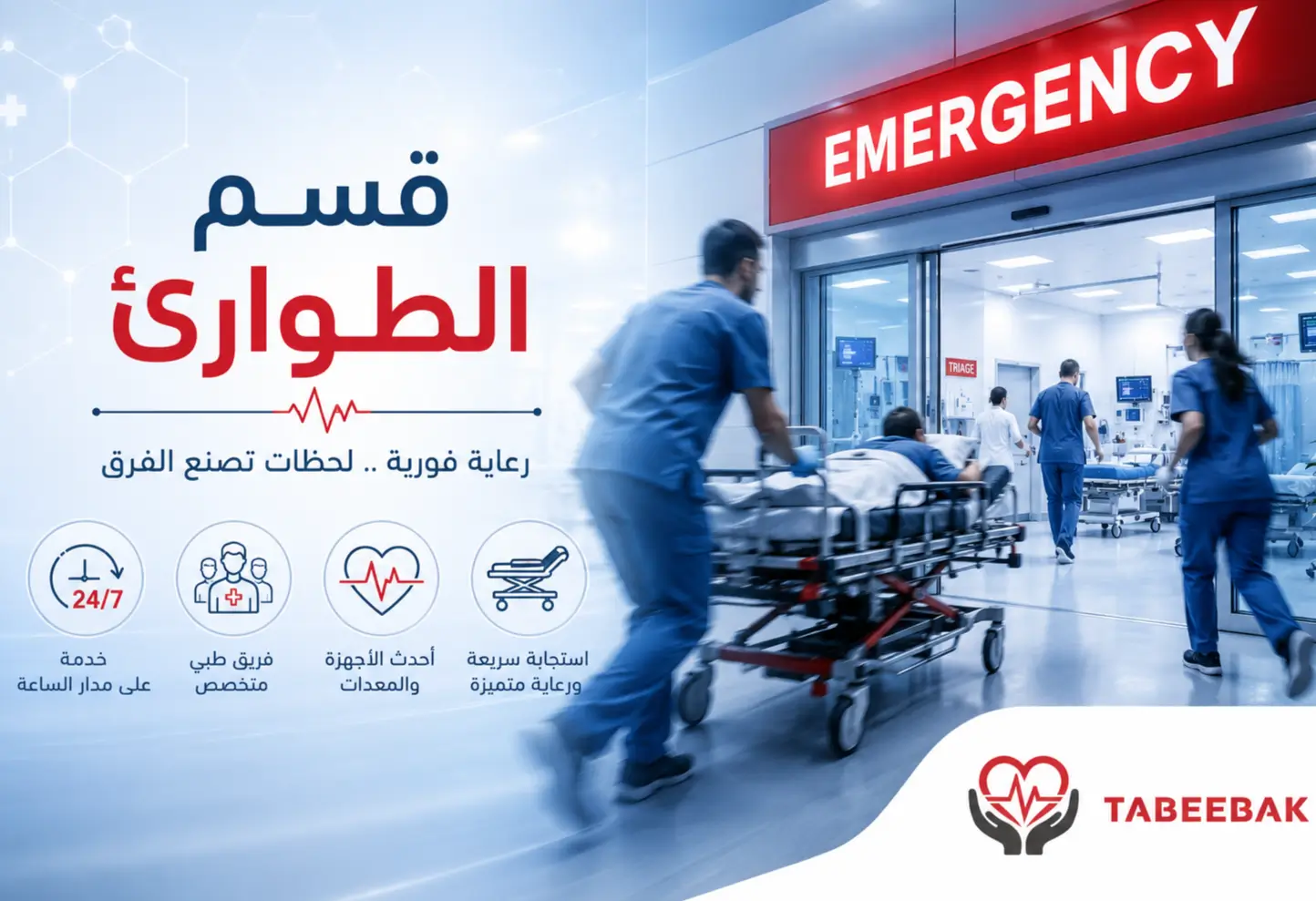
The Emergency Department is the frontline and one of the most vital components of the healthcare system, providing urgent and decisive medical intervention for critical and life-threatening conditions. At “Tabibak” International Healthcare Platform, we fully understand that time is the decisive factor in saving lives. For this reason, we are committed to connecting you with a network of the best fully equipped emergency departments, operating 24/7 in some of the most advanced and modern hospitals in Turkey. Our mission is to ensure that you receive immediate, accurate, and specialized medical care at the moments when you need it most.
Medical Conditions Managed by the Emergency Department
The specialized emergency team handles a wide range of sudden medical conditions and complex injuries, including:
- Heart attacks and strokes: Rapid intervention to open blocked arteries and save the heart muscle or brain tissue.
- Injuries and trauma: Immediate management of traffic accident injuries, complex fractures, severe bleeding, and burns of various degrees.
- Critical respiratory problems: Treatment of severe asthma attacks, choking, and pulmonary embolism.
- Emergency internal medicine and surgical cases: Food or drug poisoning, and sudden severe abdominal pain, such as appendicitis or intestinal perforation.
- Pediatric and neonatal emergencies: Providing a safe and dedicated environment for children in cases of high fever that does not respond to medication, seizures, severe allergic reactions, and accidental ingestion of foreign objects.
Advanced Diagnostic Technologies in Emergency Departments
To ensure fast and accurate diagnosis, the hospitals we work with through the “Tabibak” platform rely on a fully integrated technological infrastructure within the Emergency Department itself, helping prevent the loss of valuable time. These technologies include:
- Immediate medical imaging: X-ray, computed tomography (CT scan), and magnetic resonance imaging (MRI) devices available around the clock specifically for emergency cases, helping diagnose internal bleeding or fine fractures.
- Urgent medical laboratories: Collection and analysis of blood and tissue samples with results available within minutes, enabling physicians to make precise and appropriate treatment decisions.
- Advanced vital signs monitoring devices: Modern systems for monitoring pulse, blood pressure, continuous electrocardiography (ECG), and blood oxygen levels to track the patient’s stability moment by moment.
The Patient Journey Inside the Emergency Department: Medical Triage Protocol
When a patient arrives at the Emergency Department in any of our accredited hospitals, the care process follows structured international steps to ensure the highest level of efficiency:
- Initial assessment and triage: The patient is received by a specialized triage nurse who assesses vital signs and classifies the case according to severity, not arrival time. This system ensures that life-threatening cases receive immediate treatment without delay.
- Initial medical diagnosis: The patient is examined by a specialized emergency physician, and the necessary tests and medical imaging are requested urgently.
- Rapid therapeutic intervention: This may include administering pain-relief medications, stopping bleeding, stabilizing vital signs, or calling a specialized consultant, such as a neurosurgeon or cardiologist, for a deeper evaluation of the case.
- Final decision for the patient: Based on the patient’s stability after intervention, the decision is made either to discharge the patient with a prescription and strict follow-up instructions, or to admit them to the hospital, whether to the intensive care unit or a regular inpatient department, to continue the treatment plan.
Why Choose Emergency Services Through “Tabibak”?
At “Tabibak”, we are committed to providing exceptional care for both local and international patients. The emergency services we guide you to are distinguished by:
- Support for international patients and overcoming language barriers: We provide immediate medical interpretation services in Arabic and other languages to facilitate accurate communication between the patient and the medical team in Turkey, ensuring that no language barrier affects diagnosis during critical moments.
- Emergency physicians with international expertise: Close cooperation with major hospitals that include highly qualified consultants with international board certifications, capable of making precise and life-saving decisions within seconds.
- Medical transport and ambulance coordination: Providing the necessary support to help coordinate rapid ground ambulance or air ambulance services for complex cases that require safe and urgent transfer to or from the hospital.
Urgent medical advice: In emergencies, every minute matters and can make the real difference between life and death, or between fast recovery and permanent complications. Never hesitate to seek specialized medical help. At “Tabibak”, we are here to place your health and the health of your loved ones in safe, experienced hands, ready to provide optimal care during the most difficult moments.